
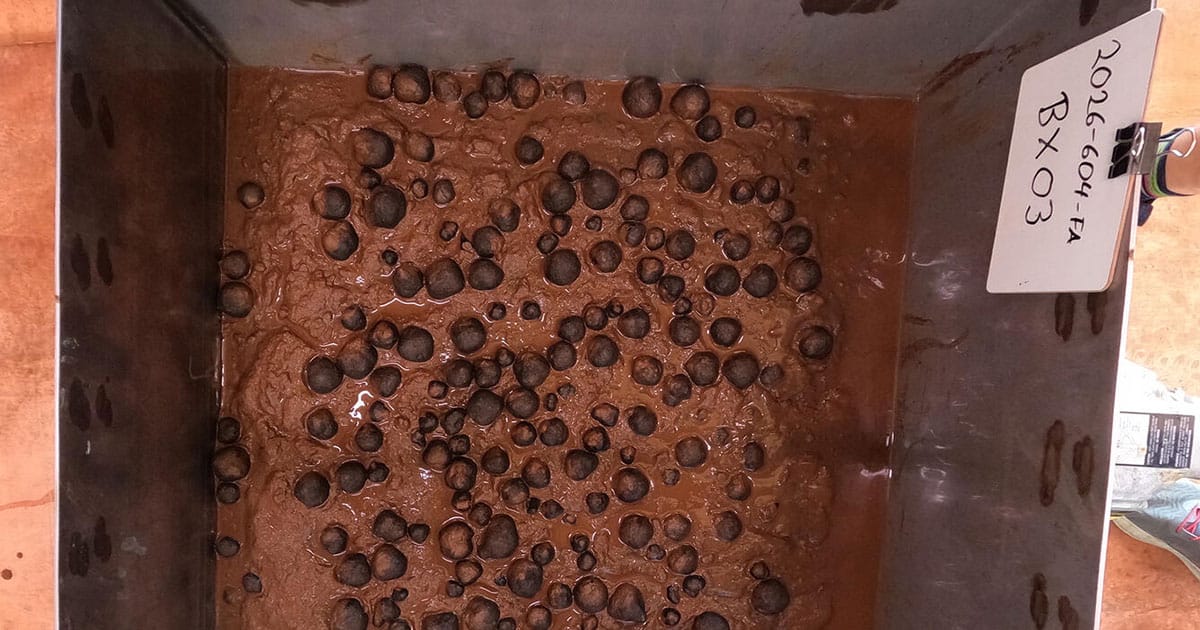
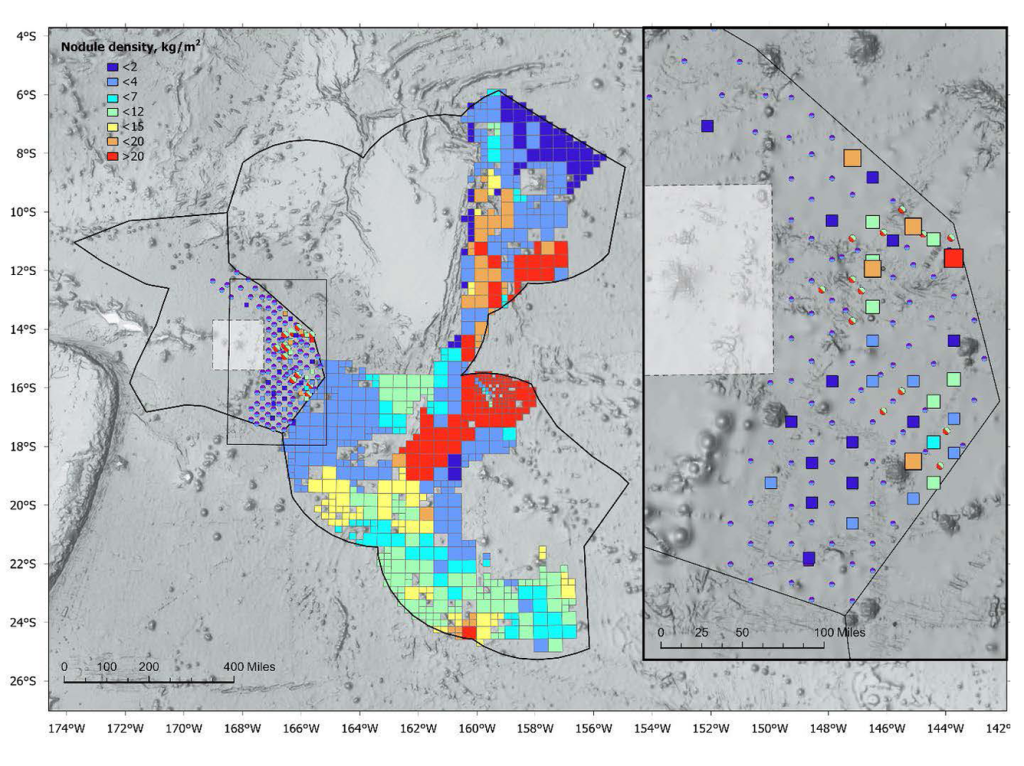
USGS scientists led a box coring effort to the Samoa Basin, in order to characterize minerals and the surrounding abyssal sediments and fauna. Thirty-eight box cores were deployed between April 13, 2026 and April 28, 2026. Thirty-six box cores recovered some amount of sediment material, with 36 recovering sufficient material to determine nodule density, and 35 recovering sufficient material for subcores to be collected for further analysis.
USGS personnel directed the sampling locations and took custody of the box cores once recovered shipboard. USGS personnel then photographed and described the cores, subsampled, conducted analyses including wet weights and time-sensitive measurements, and preserved subsamples and additional components for future work. This report is an expedition summary with preliminary datasets; further data releases and publications are forthcoming.
Abstract for the cruise report:
This cruise report describes work from leg three of the NOAA American Samoa Abyssal Mapping effort, OPR-T900-KR-26. Leg one preceded this effort and collected ship-based acoustic data. Leg two collected autonomous underwater vehicle (AUV) data and began before, continued contemporaneously, and finished subsequently to leg three. The USGS field activity number assigned to this expedition is 2026-604-FA. The objective of this expedition was to collect representative box cores to inform prospectivity analyses through the region, and co-located interdisciplinary datasets as practical.
USGS personnel directed the sampling locations and took custody of the box cores once recovered shipboard. USGS personnel then photographed and described the cores, subsampled, conducted analyses including wet weights and time-sensitive measurements, and preserved subsamples and additional components for future work. Data releases co-released with this report are listed in the section “paired data releases.” NOAA released data from all legs of this effort in near-real time. Details of the preceding legs, the data, and NOAA’s project summary are available from NOAA (2026). This report is an expedition summary with preliminary datasets; remaining data releases and publications will be forthcoming.
To read the report, visit: https://eartharxiv.org/repository/view/13380/