
Launched in 2022, SSKI is a global platform that advances research, capacity development, and data-sharing tools for deep-sea biodiversity assessments. In her opening remarks, Madam Secretary-General Leticia Carvalho recalled that the Authority’s mandate includes the responsibility “to ensure the sustainable management of the ocean by safeguarding its ecosystems and enabling responsible human activities.” She added that “this requires robust scientific evidence to inform decision-making, as well as strong international cooperation, strategic partnerships and environmental stewardship.”
At the heart of SSKI is the One Thousand Reasons campaign, which aims to describe and name 1,000 new deep-sea species by 2030. Its first call attracted 65 applications from 21 countries, representing all five regional groups of the Authority.
During the side event, the Environmental Coordinator of the ISA Secretariat, Dr. Luciana Genio, presented a video highlighting the campaign’s achievements and featuring testimonials from taxonomists from Asia and South America.
The Ambassador of France to the ISA, H.E. Ms. Marianne Ziss, remarked: “France sees SSKI as a powerful mechanism for investing in people and expertise, supporting both established experts and the next generation of deep-sea scientists through fellowships, training opportunities and international collaboration.”
Ambassador Ziss highlighted the MeioScool taxonomy workshop, held in partnership with Ifremer, an ISA contractor, in Spring 2026. She also called for the mobilization of additional financial resources to enable the programs to continue expanding and training more experts from developing countries.
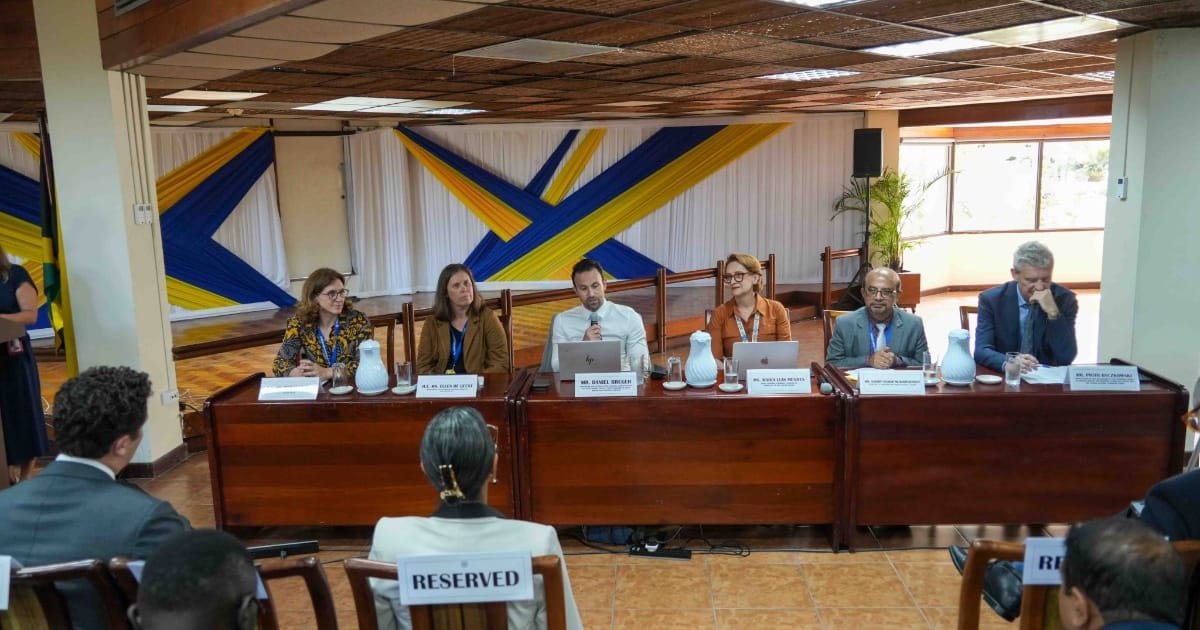
The Ambassador of Belgium to the ISA, H.E. Ms. Ellen De Geest, emphasized the importance of scientific knowledge for sound ocean governance: “Effective ocean governance depends on access to reliable scientific information. Such information provides the foundation for evidence-based decision-making and helps us better understand marine ecosystems.”
Through a video message, the Legal Counsellor of the Department of Foreign Affairs and Trade of the government of Ireland, Mr. Carl Grainger, confirmed that Ireland “remains committed to supporting efforts that strengthen the science-policy interface, promote open access to biodiversity knowledge, and help ensure that decisions concerning the deep seabed are informed by the best available science.”
During the panel discussion on Scaling Impact and Partnerships, the Joint Head of the Ocean Policy Unit of the United Kingdom of Great Britain and Northern Ireland, Mr. Daniel Breger, emphasized the importance of “creating effective pathways through which scientific evidence can inform policy and regulatory discussions.” He also reaffirmed the United Kingdom’s strong support for Regional Environmental Management Plans (REMPs).
The Legal Adviser of the Permanent Mission of Portugal to the United Nations, Ms. Maria Luís Mendes, recognized the leadership and commitment demonstrated by the Authority and its SSKI partners, by declaring that “Portugal believes that science must be at the heart of ocean governance, particularly because the deep seabed remains one of the least explored environments on the planet.”
During his remarks, Scientist ‘G’ at India’s Ministry of Earth Sciences, Dr. Sandip Kumar Mukhopadhyay, highlighted India’s involvement in scientific exploration activities since 1987. He noted that the country’s exploration contracts with the Authority form part of its continued engagement and strong commitment to the work of the ISA. India, he added, considers SSKI one of the Authority’s most important programs. Dr. Mukhopadhyay also recalled that the advancement of marine scientific research is mandated under the United Nations Convention on the Law of the Sea (UNCLOS).
The Deputy Head of the Delegation of the European Union to Jamaica, Mr. Piotr Byczkowski, highlighted the initiative’s significant contribution to identifying and describing new species from deep-sea habitats. He also emphasized the need for further research and stronger scientific evidence concerning the potential impacts of deep-sea mining on marine ecosystems.
The event concluded with a call to action delivered by the President of the National Marine Biodiversity Institute of Korea (MABIK), Republic of Korea, Mr. Hyun Tae Kim. He noted that MABIK has been a proud supporter of the initiative since the beginning, by declaring:
“As we look towards 2030, we invite all Member States and partners to join us in expanding our partnerships by bringing together governments, scientific institutions, international organizations, philanthropic organizations and regional networks committed to advancing deep-sea knowledge. Our success will not be measured simply by the number of species described, workshops conducted, or datasets generated. Rather, it will be measured by whether we have established a global platform for collaboration, one that connects scientists, institutions, governments and knowledge holders across regions; facilitates access to expertise, samples and data; and sustains deep-sea biodiversity research for decades to come.”