
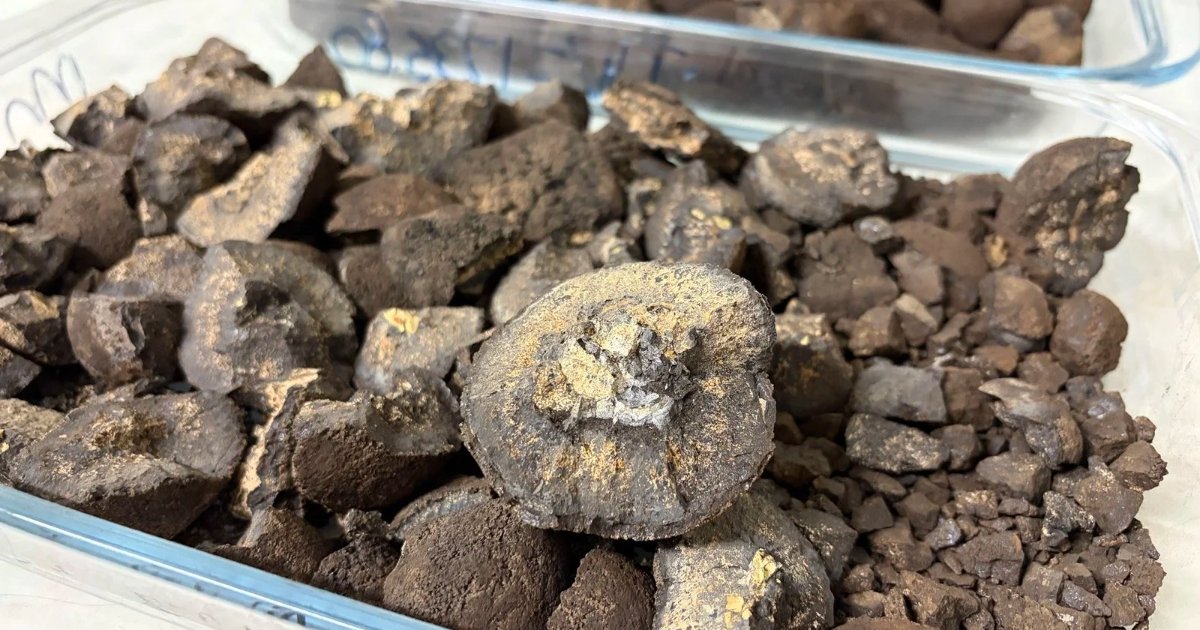
Cobalt Blue has been engaged by consortium partner Glomar to deliver key technical workstreams for a PEA for Project Infinity, a planned US-based polymetallic nodule refinery. The PEA is intended to assess the technical and economic feasibility of processing polymetallic nodules and will support evaluation of Project Infinity. The contracted scope includes metallurgical testwork, process flowsheet development, capital and operating cost estimation, and US site evaluation activities to support the Project Infinity PEA, which is currently targeted for completion in Q4 2026. Cobalt Blue will receive $150,000 for the work, applying the Company’s proprietary processing technology and capabilities at the Broken Hill Technology Center.
Cobalt Blue CEO Dr. Andrew Tong said: “The PEA Contract is the next step in the growing relationship with Glomar. The contract formalizes initial work programs on Project Infinity, in particular the flowsheet development testwork being undertaken at the Broken Hill Technology Center on samples provided by Glomar. On behalf of the Consortium, we look forward to progressing the PEA, which is currently targeted for completion in Q4 2026.”
In support of the overall PEA objectives, Cobalt Blue’s contracted scope covers three key workstreams:
Metallurgical Development
Advance metallurgical development and flowsheet design to extract Mn, Cu, Ni, and Co from polymetallic nodule samples, using Cobalt Blue’s proprietary hydrometallurgical processing technology.
Process Plant Design
Develop preliminary process flowsheet design and capital and operating cost estimates to an AACE Class V standard (accuracy range of approximately ±30–50%).
Site Layout and Infrastructure
Identify the processing site layout and infrastructure requirements to support the ongoing US site selection evaluation. Presently, four sites are under assessment.
In completing the above scope of work, Cobalt Blue will assist in the identification of the project’s key technical, commercial, and regulatory risks and opportunities. Glomar’s formal engagement of Cobalt Blue to progress technical workstreams for Project Infinity is a key element of the consortium agreement between the two companies. The PEA Contract is based on Cobalt Blue’s standard terms for third-party testwork and includes provisions relating to confidentiality, intellectual property, liability, and termination.
Project Infinity is a consortium between Glomar and Cobalt Blue aiming to build and operate the first commercial polymetallic nodule refinery in the United States. The consortium is assessing the potential for an integrated business to harvest, process, and sell manganese, copper, nickel, and cobalt from polymetallic nodules. This project is directly aligned with US national strategies to establish secure and resilient critical minerals supply chains. Since its formation, the consortium has progressed US site selection, with a shortlist of candidate locations identified, and nodule samples have been delivered to Cobalt Blue’s Broken Hill Technology Center, where initial testwork has commenced.
Glomar is an American critical minerals company dedicated to exploring, collecting, and processing seabed polymetallic nodules to secure a reliable, long-term supply of essential materials. Through its wholly owned subsidiary UK Seabed Resources Limited (UKSR), Glomar holds two exploration contracts for polymetallic nodules in the Clarion Clipperton Zone (CCZ) of the Pacific Ocean totaling 133,000 km². Glomar has assembled leading scientists, engineers, and offshore specialists to drive environmental research and advance the battery, manufacturing, and defense-related resources found inside polymetallic nodules. Glomar builds on decades of UKSR research, leveraging extensive ocean exploration, operations, and engineering experience, and is affiliated with established scientific and academic institutions.
Cobalt Blue Holdings Limited is a minerals processing and mining company, progressing two strategies. Firstly, the Company is developing an integrated mine and midstream processing platform for cobalt in Australia, designed to diversify critical mineral supply chains in partnership with like-minded countries. Secondly, the Company is advancing a copper-silver-zinc project for supply into the industrial electrification sectors.
Cobalt Blue’s assets include the Kwinana Cobalt Refinery (KCR), Australia’s first dedicated cobalt refinery producing high-purity cobalt sulfate for the lithium-ion battery industry and high-grade cobalt metal for defense and industrial applications. Advancing KCR in the near term strengthens domestic refining capability and de-risks upstream mining projects through a versatile, multi-feedstock facility. Recent technical milestones and successful product qualification have also validated the refinery’s design, attracted interest from international partners, and reinforced the project’s pathway toward development.
The Broken Hill Cobalt Project (BHCP) is one of the world’s largest undeveloped cobalt resources, positioned to become a globally significant operation. It was recently granted a three-year extension to Major Project Status by the Commonwealth Government in recognition of its strategic importance. Following the material improvement in cobalt pricing, BHCP is now advancing environmental permit applications.
Since 2021, Cobalt Blue has invested more than A$15 million in the Broken Hill Technology Center (BHTC). The facility underpins the process development for Cobalt Blue’s projects. Following the successful demonstration of the entire flowsheet for the BHCP, the focus has turned to piloting the Refinery flowsheet. In addition to producing samples of cobalt sulfate and cobalt metal for prospective offtakers, recent programs have included evaluating battery black mass as a potential Australian source of cobalt for the Refinery.
The Halls Creek Project offers optionality for diversified commodity exposure via a low-cost copper-zinc-silver project with near-term exploration planned to test resource growth uplift, and an updated Scoping Study to be released in Q4 after current testwork for silver recovery and assays is completed.