
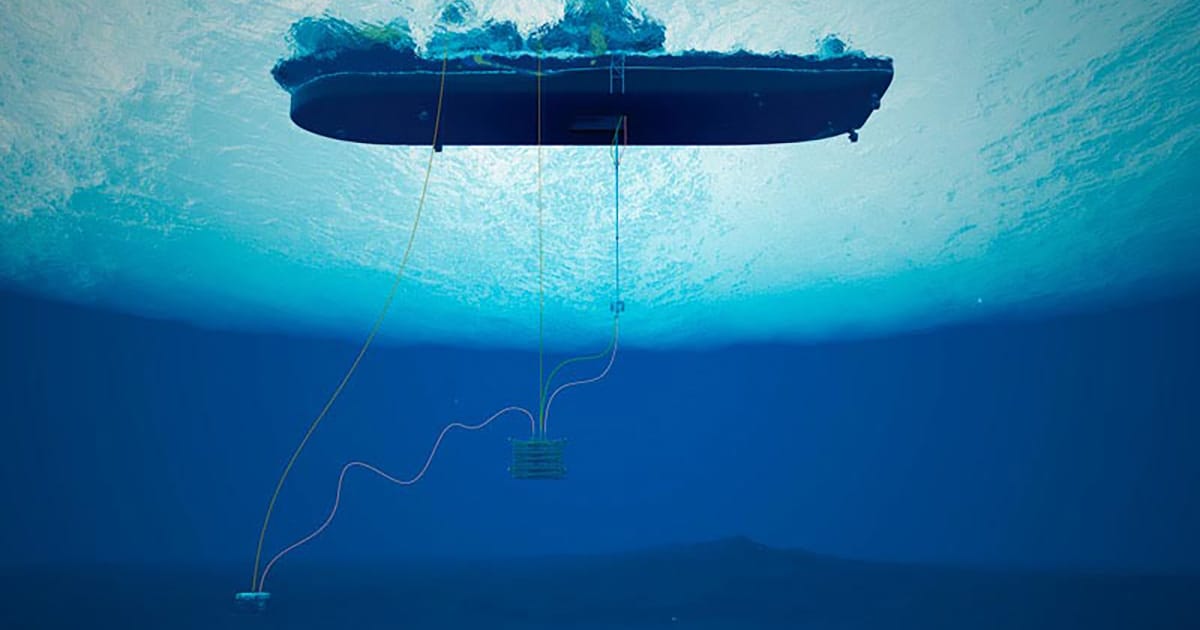
The Company intends to proceed to subsequent engineering and design phases as it continues to evaluate the potential development of a PMN collection system. Any future commercial operations remain subject to, among other things, the completion of engineering studies, the availability of financing, and the receipt of required regulatory approvals.
As part of the pre-FEED study, the Company identified the following preliminary design parameters for a potential PMN collection system:
- Selection of Soil Machine Dynamics Ltd. (SMD) to support the design of a 6,000-meter-rated subsea collector system. SMD is a designer and manufacturer of work-class remotely operated vehicle systems.
- Selection of Oil States International, Inc. (OSI) to support the design of a riser and vertical transport system through their OSI Minerals group. OSI has led the market for seafloor to surface transport technology since 2022 with their Merlin™ Deepsea Minerals Riser packages and has achieved world-record water depths with recent system deployments.
- Preliminary design target of approximately 1.0 to 1.5 million wet metric tons of PMNs per year.
- Conceptual support for operation from third-party or otherwise available vessels of approximately 130 to 150 meters in length.
- Incorporation of key environmental design features and considerations to include:
- a closed-loop riser system intended to avoid mid-water discharge and mixing of surface and bottom waters
- a trackless collector concept intended to reduce seafloor disturbance
- all-electric ROV and nodule collector systems intended to drastically reduce subsea noise and improve energy efficiency
- No submerged pumps or use of air-lift system in vertical riser to reduce subsea noise
These design parameters are preliminary in nature and remain subject to change as engineering work progresses.
Based on the pre-FEED study results, which required substantial investment and more than 1,000 engineering hours, DSRM plans to advance to the next engineering and design phase. This phase is expected to further refine system specifications, manufacturing approaches, and cost estimates over approximately 90 to 120 days.
Anthony “Tony” Romeo, Chief Executive Officer of DSRM, stated: “We are encouraged by the progress achieved during the pre-FEED phase. This work marks an important engineering milestone in the Company’s evaluation of a potential polymetallic nodule collection system. We remain focused on advancing our engineering efforts while continuing to assess regulatory, environmental, and commercial considerations.”